

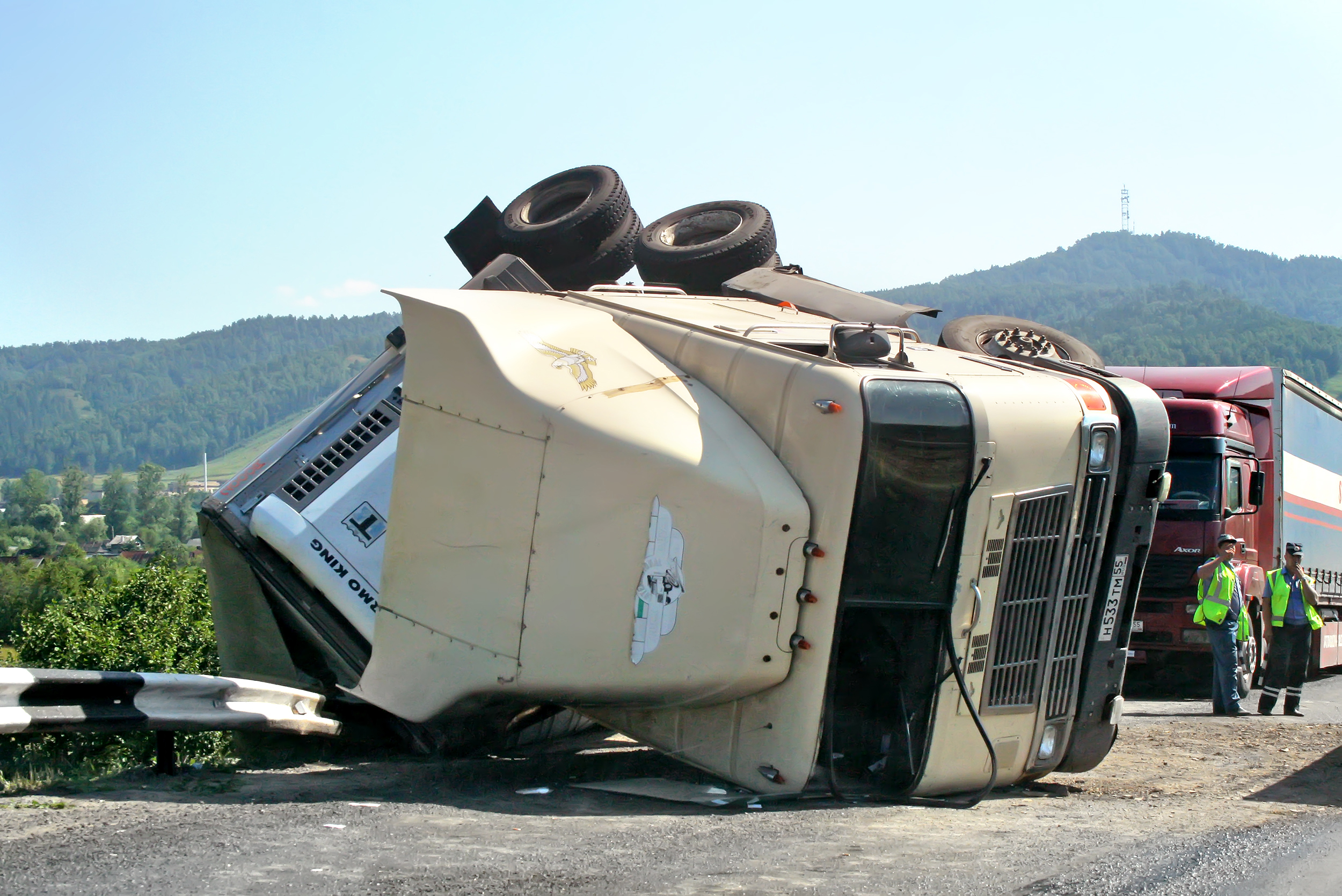
A jackknife accident occurs when a tractor-trailer’s cab and trailer fold toward one another at the point where they connect, resembling the angle of a folding pocketknife. As the trailer swings sideways, it may sweep across several lanes, strike nearby vehicles, or create an obstacle that approaching motorists cannot avoid. Understanding why jackknife accidents happen and the injuries they cause can help victims recognize when negligence may have contributed to a collision.
Jackknifing generally begins when the tractor or trailer loses traction. If the wheels lock or slide while the truck continues moving, the trailer’s momentum may force it outward. Several factors can contribute to this loss of control.
Excessive Speed
Truck drivers must adjust their speed to traffic, visibility, road conditions, and the weight of their loads. A tractor-trailer traveling too quickly may become unstable during a turn or emergency maneuver. Speed also increases stopping distance and makes it more difficult for a driver to correct a skid before the trailer swings sideways.
Sudden or Improper Braking
Slamming on the brakes can cause the tractor’s wheels to lock while the trailer continues moving. Improper braking techniques, especially on a curve or downgrade, may produce the same result. Commercial drivers require specialized training because stopping a fully loaded tractor-trailer safely is considerably different from stopping a passenger vehicle.
Slippery Roads and Severe Weather
New York drivers regularly encounter snow, ice, freezing rain, and wet pavement. These conditions reduce tire traction and increase the risk of skidding. Truck drivers should slow down, leave additional following distance, and use extra caution when conditions deteriorate.
Driver Fatigue
Commercial driving often involves long shifts and demanding delivery schedules. A fatigued driver may react slowly, misjudge traffic conditions, or fail to recognize an approaching hazard. Falling asleep at the wheel can cause the driver to brake or steer abruptly after waking, potentially destabilizing the trailer.
Distracted or Impaired Driving
Texting, adjusting navigation equipment, eating, or looking away from the road can prevent a truck driver from noticing slowing traffic. Alcohol, illegal drugs, and certain medications may also interfere with coordination and decision-making. When the driver finally recognizes the danger, an aggressive braking or steering maneuver may trigger a jackknife.
Improperly Loaded Cargo
Cargo affects a truck’s balance and handling. An overloaded trailer may require more time to stop, while poorly secured cargo can shift during transit and move the vehicle’s center of gravity. An uneven or shifting load may cause the trailer to sway, skid, or swing outward during a turn.
Responsibility for cargo-related accidents may extend beyond the driver. A loading contractor, shipper, trucking company, or another business could be liable if its negligence contributed to the crash.
Defective or Poorly Maintained Equipment
Worn tires, faulty brakes, damaged coupling equipment, and malfunctioning anti-lock braking systems can make a truck difficult to control. Trucking companies and maintenance providers must inspect and service commercial vehicles appropriately. Maintenance records, inspection reports, and repair histories may reveal whether a preventable mechanical problem contributed to an accident.
Traumatic Brain Injuries
A sudden impact can cause the brain to move inside the skull, even when the victim’s head does not strike an object. Symptoms may include headaches, confusion, memory problems, dizziness, and changes in mood or behavior. Severe brain injuries can cause lasting cognitive or physical limitations.
Spinal Cord Damage and Paralysis
Damage to the spinal cord may interfere with communication between the brain and the rest of the body. Victims can experience weakness, loss of sensation, or partial or complete paralysis. These injuries may require surgery, rehabilitation, assistive equipment, and ongoing personal care.
Broken or Crushed Bones
Jackknife crashes frequently cause fractures involving the arms, legs, ribs, pelvis, or facial bones. Complex or crushed fractures may require multiple operations and extensive rehabilitation. Some victims experience permanent weakness, reduced mobility, or disfigurement.
Internal Bleeding and Organ Damage
Blunt-force trauma can damage the lungs, liver, kidneys, spleen, and other internal organs. Because internal injuries may not be immediately visible, they can become life-threatening without prompt treatment. Abdominal pain, dizziness, weakness, or unusual bruising should receive urgent medical attention.
Contact the New York Truck Accident Lawyers at Carrion Accident & Injury Attorneys, PLLC for a Free Consultation
A jackknife collision can leave victims facing extensive medical care, lost income, pain, and uncertainty about the future. While this is an undoubtedly challenging time, you do not have to navigate the personal injury claims process on your own. Carrion Accident & Injury Attorneys, PLLC can investigate the crash, identify potentially liable parties, preserve important evidence, and pursue economic damages and non-economic damages on your behalf.
Contact our experienced New York truck accident lawyers today at (212) 433-3100 to schedule a free consultation.
Long Island Injury Law Office
Carrion Accident & Injury Attorneys, PLLC
532 Broadhollow Rd, Suite 125, Melville, NY 11747
(212) 433-3100
Open 24/7
Queens Injury Law Office
Carrion Accident & Injury Attorneys, PLLC
74-09 37th Ave #301A, Jackson Heights, NY 11372
(718) 550-7851
Open 24/7
Manhattan Injury Law Office
Carrion Accident & Injury Attorneys, PLLC
211 E 43rd St, Suite 7-11, New York, NY 10017
(646) 718-4458
Open 24/7